Atomistic Blueprinting of Electrochemical CO Reduction Reaction Pathways over Transition Metal Phosphides
M. Awais and Y. Abghoui · Molecules 31(8), 1334
DOI: 10.3390/molecules31081334 ↗NEXSURF develops catalysts to turn CO₂ and CO into useful chemicals using renewable electricity. Our initial focus is carbon monoxide and formate.
Develop three proprietary catalyst families—transition-metal carbides, carbonitrides, and phosphides—for electrochemical conversion using renewable electricity.
Focus first on carbon monoxide and formate, with further products guided by validation and partner needs.
Test how selectively and reliably catalysts produce the target chemicals under relevant conditions.
License validated catalyst technology and support its integration with industrial partners.
Screening counts are internal project metrics. Predicted performance remains to be confirmed through application-relevant experiments.
Our role starts after capture. We develop catalysts to convert a supplied CO₂ or CO stream into chemical feedstocks, with the aim of reducing reliance on fossil carbon. Climate benefits depend on the carbon source, electricity supply, and the process being replaced.
Electricity drives the conversion; the catalyst helps direct the reaction toward the desired product. We combine atom-scale simulations and machine learning to select promising materials for laboratory testing.
Start with carbon monoxide and formate, then explore further products as validation progresses.
Investigate non-precious catalyst families for improved selectivity, energy efficiency, and lifetime.
Develop evidence and know-how for joint development and future licensing.
We use computational screening to guide experiments, then develop validated results into technology for industrial partners.
Atom-scale simulations and machine learning identify promising catalyst surfaces for testing.
Synthesize shortlisted materials and test their products, efficiency, and stability as experimental capacity becomes available.
Package validated results, catalyst know-how, and intellectual property for licensing or joint development.
A cross-section of electrochemical CO₂ conversion: CO₂ feeds the cathode, water feeds the anode, and a central membrane separates the two sides. Catalyst-coated porous electrodes support the reactions, with products leaving the cathode side and oxygen leaving the anode side.
CO · HCOO⁻ · CH₄ · CH₃OH · C₂H₅OH
Conceptual flow-cell animation based on the reference schematic. Moving streams show flow direction, not measured rates. Products depend on the catalyst and operating conditions; this is not a display of experimental results.
More than 500 candidate surfaces screened computationally, with published studies on CO₂ and CO conversion.
Explore the research →Test shortlisted catalysts for product selectivity, energy requirements, and operating stability.
We are seeking testing facilities, research collaborators, and funding to advance validation.
Work with us →Screening counts are internal project metrics. Computational predictions require experimental confirmation.
NEXSURF ehf. is an Icelandic R&D company developing proprietary catalyst technologies for electrochemical carbon conversion. The company combines computational screening, targeted validation, and IP development in one partner-focused platform.
Our initial commercial path is through catalyst IP generation, validation, and technology transfer to industrial partners who are building infrastructure for potentially lower-carbon fuel and chemical production.
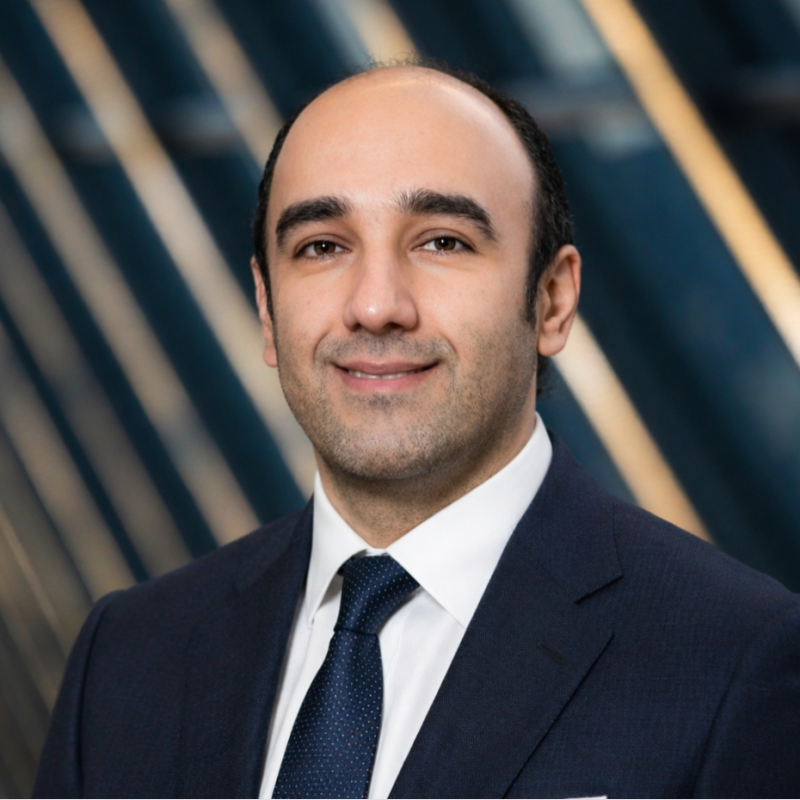
Leads NEXSURF's scientific strategy across catalyst design, CO₂ and CO conversion, experimental-validation priorities, intellectual property, and industry-facing development.
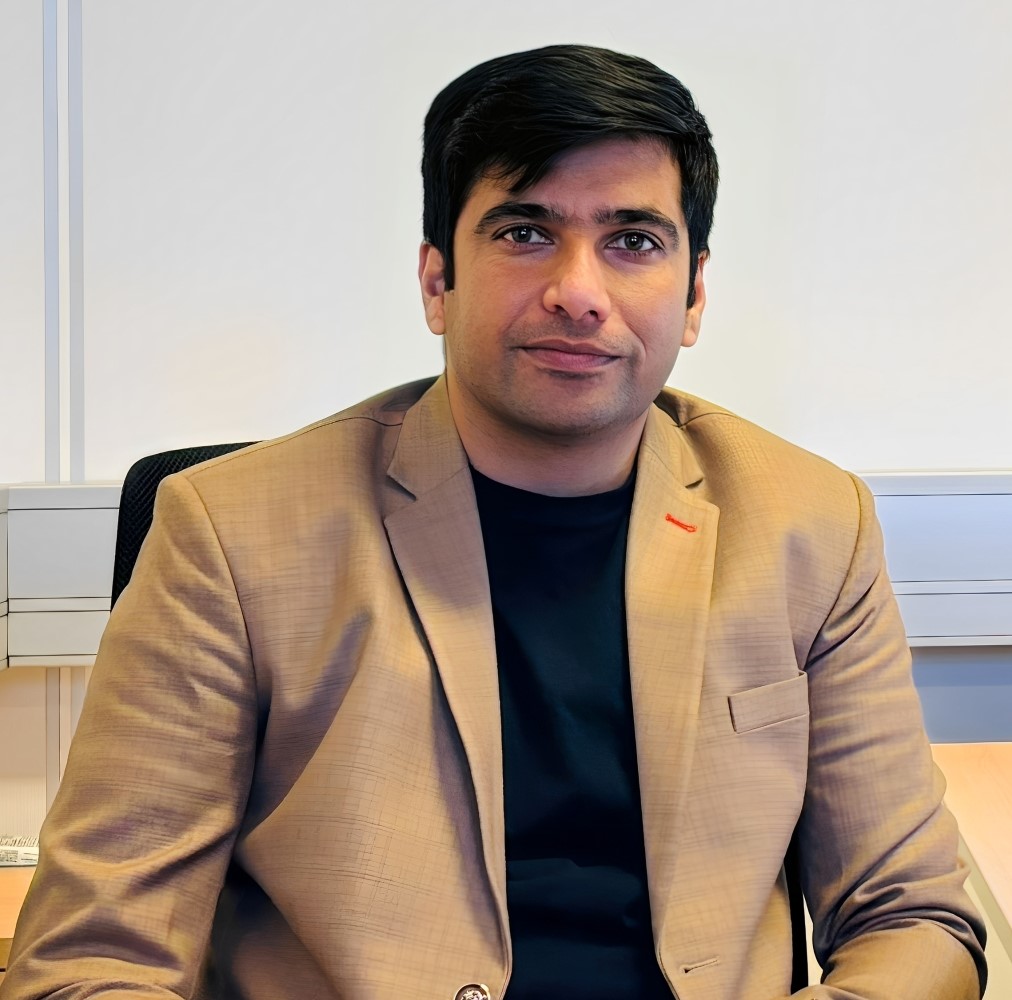
Develops DFT screening of NEXSURF catalyst surfaces, maps CO₂ and CO reduction pathways, and prioritizes candidates for lab-scale validation.

Develops causal and graph machine-learning workflows for dopant selection, candidate ranking, and data-guided catalyst discovery.
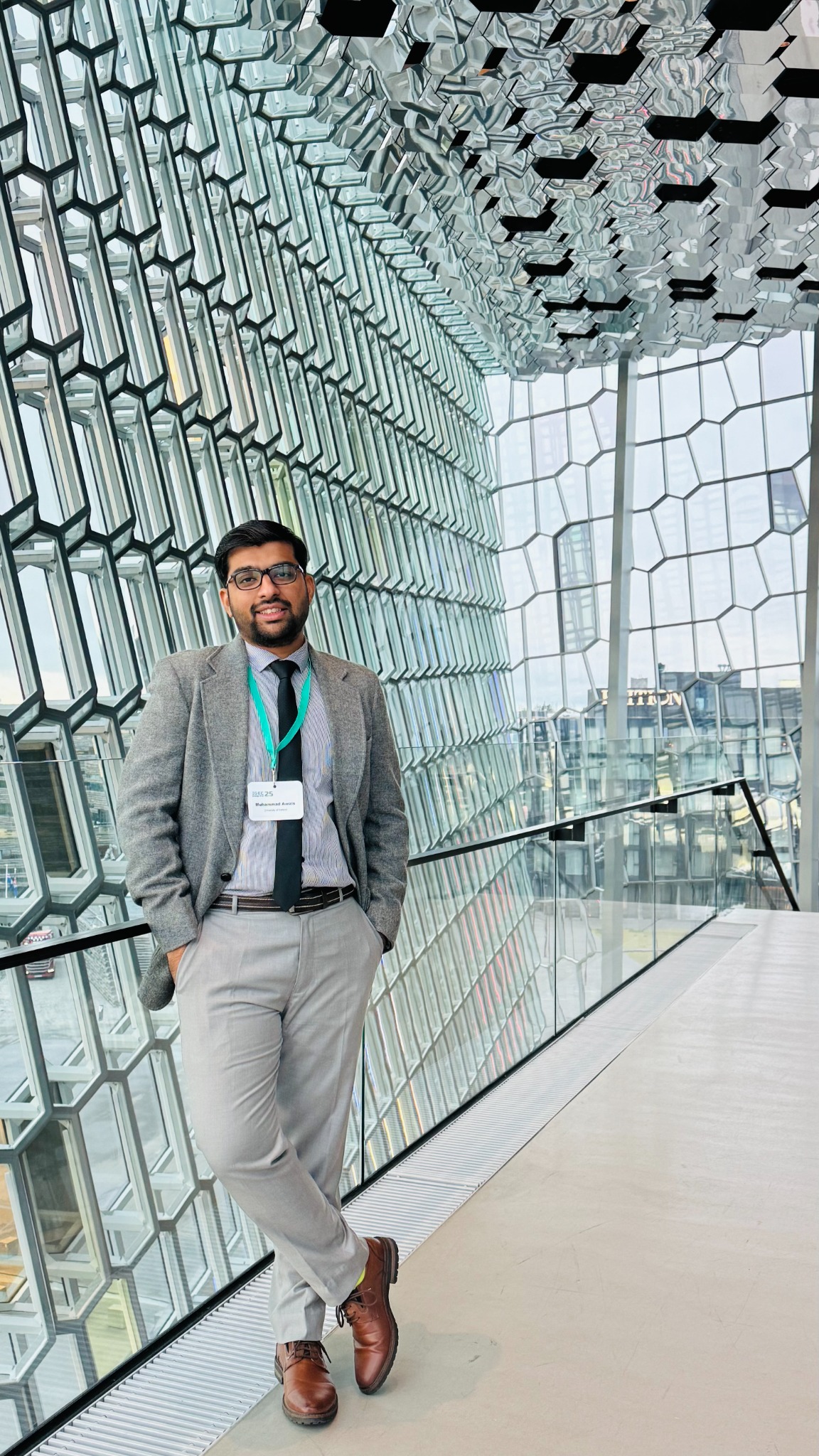
Develops atomistic models for CO₂ activation and CO reduction, maps C₁ and C₂ product pathways, and incorporates electrolyte and surface-coverage effects.
Peer-reviewed articles and conference work by NEXSURF team members directly related to electrochemical CO₂ or CO conversion, grouped by publication year.
M. Awais and Y. Abghoui · Molecules 31(8), 1334
DOI: 10.3390/molecules31081334 ↗M. Awais, M. Ahmad ul Haq and Y. Abghoui · Electrochimica Acta 556, 148266
DOI: 10.1016/j.electacta.2026.148266 ↗M. Awais, M. S. S. Eggertsson and Y. Abghoui · Journal of CO₂ Utilization 111, 103517
DOI: 10.1016/j.jcou.2026.103517 ↗M. Awais and Y. Abghoui · Electrochimica Acta 550, 148054
DOI: 10.1016/j.electacta.2025.148054 ↗M. Awais and Y. Abghoui · ACS Applied Energy Materials 9(6), 3545–3555
DOI: 10.1021/acsaem.6c00309 ↗N. Ashraf and Y. Abghoui · Fuel 407, 137382
DOI: 10.1016/j.fuel.2025.137382 ↗M. Khaniha, A. Saki, U. Faghihi, R. Unnthorsson and Y. Abghoui · ACDSA 2026
DOI: 10.1109/ACDSA67686.2026.11467594 ↗N. Ashraf, D. B. Betolaza, H. I. Gunnarsson, M. I. Khatibi, A. Iqbal and Y. Abghoui · Electrochimica Acta 517, 145755
DOI: 10.1016/j.electacta.2025.145755 ↗N. Ashraf and Y. Abghoui · International Journal of Hydrogen Energy 136, 383–391
DOI: 10.1016/j.ijhydene.2025.05.044 ↗N. Ashraf and Y. Abghoui · Surfaces and Interfaces 70, 106793
DOI: 10.1016/j.surfin.2025.106793 ↗N. Ashraf and Y. Abghoui · Electrochimica Acta 525, 146069
DOI: 10.1016/j.electacta.2025.146069 ↗N. Ashraf and Y. Abghoui · Molecules 30(17), 3637
DOI: 10.3390/molecules30173637 ↗M. Awais, N. Ashraf and Y. Abghoui · Journal of Environmental Chemical Engineering 13(3), 116621
DOI: 10.1016/j.jece.2025.116621 ↗M. Awais and Y. Abghoui · Materials Today Energy 53, 101970
DOI: 10.1016/j.mtener.2025.101970 ↗M. Awais, N. Ashraf and Y. Abghoui · Applied Surface Science 710, 163815
DOI: 10.1016/j.apsusc.2025.163815 ↗M. Awais and Y. Abghoui · Electrochimica Acta 541, 147216
DOI: 10.1016/j.electacta.2025.147216 ↗N. Ashraf, A. Iqbal and Y. Abghoui · Journal of Materials Chemistry A 12(44), 30340–30350
DOI: 10.1039/D4TA05592F ↗Publication details were checked against University of Iceland research records and linked to the publisher DOI. The list is limited to work directly related to CO₂ or CO reduction.
Core experimental validation and benchmarking. Proof-of-concept system design. IP protection through strategic patent filings. Outreach to research and industrial partners.
Demonstrate performance under application-relevant conditions — proof of concept. Expand external testing and strengthen strategic partnerships. Outreach to deep tech investors.
Transition from laboratory validation toward pilot-scale readiness. Secure funding and industrial support for pilot-scale activities.
Scale deployment through strategic pilot partnerships and licensing models. Support industrial integration and joint development initiatives across target markets.
General claims on this page use U.S. government science and U.S.-based scientific institutions. NEXSURF-specific claims retain their original primary records.
NEXSURF-specific publications and public patent records are linked where their claims appear. Confidentiality applies only to unpublished material and non-public development data.
NEXSURF is entering its validation phase. We are looking for capital, infrastructure, and industrial partners to move shortlisted candidates from laboratory validation toward licensing.
Deep-tech pre-seed / seed funding to finance experimental validation, proof-of-concept system design, national-phase entries from 2027, and non-dilutive innovation grants.
Talk to us about investing →CO₂ suppliers, capture operators, e-fuel companies, and chemical producers for joint development: testing our catalysts under application conditions and shaping early licensing agreements around real industrial needs.
Become a development partner →Electrochemical testing capacity, characterization infrastructure, and academic collaborations to accelerate benchmarking of shortlisted catalyst candidates.
Collaborate on validation →We welcome conversations with industrial partners, investors, research collaborators, and institutions interested in carbon utilization technology.